NCLEX-RN Pediatric Dehydration Cheat Sheet (Free Printable)
Free NCLEX-RN pediatric dehydration cheat sheet — printable study guide for nursing students. Every fact verified against authoritative sources.
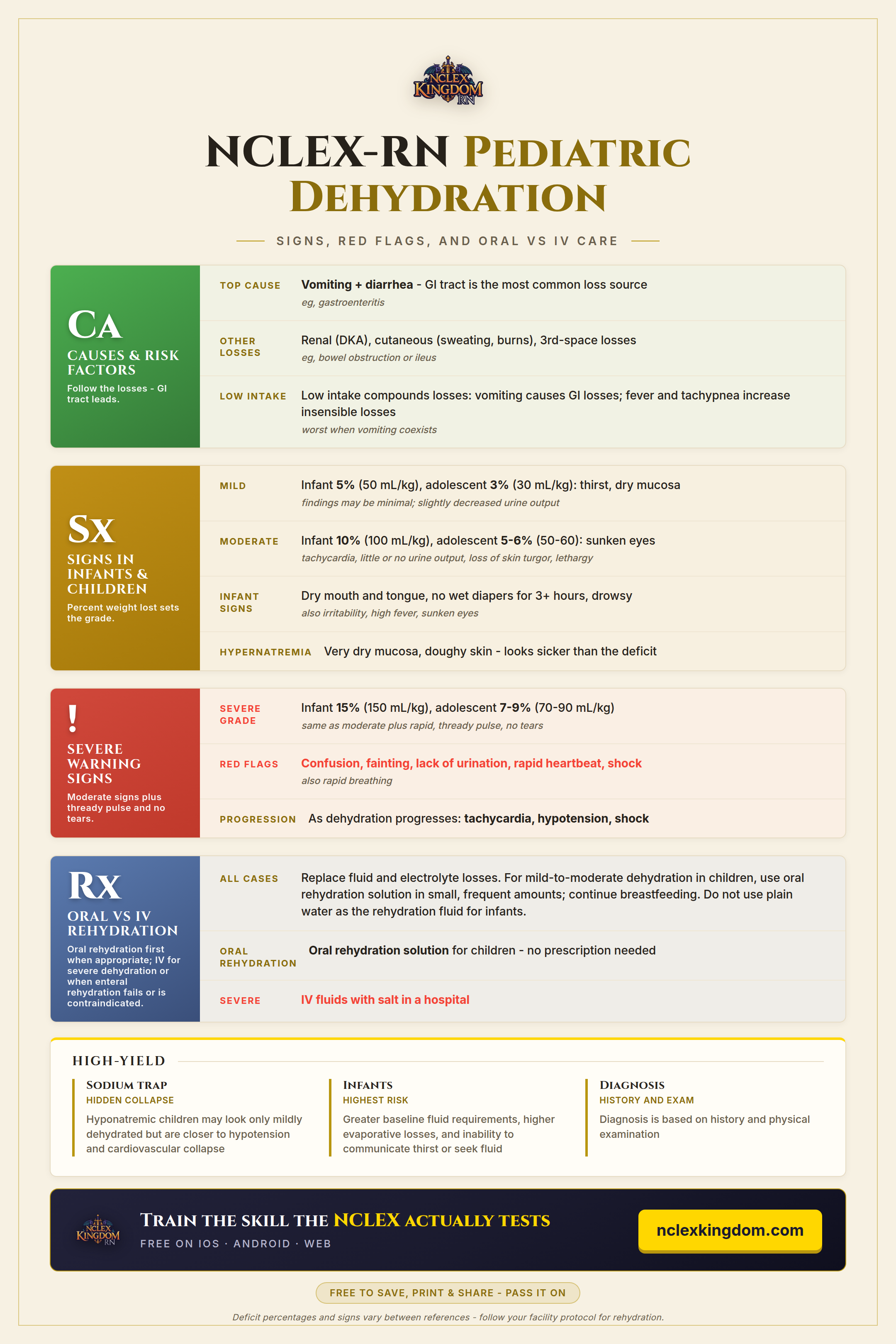
Pediatric dehydration shows up on the NCLEX-RN because it stacks several testable skills into one scenario: grading severity, spotting red flags, and deciding between oral and IV rehydration. This cheat sheet walks you through all three. It starts with causes, where the gastrointestinal tract leads as the most common source of fluid loss through vomiting and diarrhea. It then grades signs by percent weight lost, from mild thirst and dry mucosa through moderate sunken eyes and lethargy to severe presentations with a rapid, thready pulse and no tears. It flags the emergency picture: confusion, fainting, lack of urination, rapid heartbeat, and shock. Treatment coverage contrasts oral rehydration solution in small, frequent amounts for mild-to-moderate cases with IV fluids with salt in a hospital for severe ones, and notes that plain water is not the rehydration fluid for infants. Watch for the traps the sheet calls out: hyponatremic children can look only mildly dehydrated while sitting closer to cardiovascular collapse, and infants are at highest risk. Each block carries a mnemonic, so use them as hooks, quiz yourself on the thresholds, and follow your facility protocol since deficit percentages vary between references.
Tap to open the full-size image in a new tab.
Deficit percentages and signs vary between references - follow your facility protocol for rehydration.
Want to practice applying this under exam pressure? NCLEX Kingdom has thousands of NCLEX-style questions - start free in your browser.