NCLEX-RN Shock Quick Reference Cheat Sheet (Free Printable)
Free NCLEX-RN shock quick reference cheat sheet — printable study guide for nursing students. Every fact verified against authoritative sources.
Shock earns its place on the NCLEX-RN because it forces you to connect mechanism, pathophysiology, assessment, and treatment, and the stakes are explicit: persistent shock means irreversible cell damage and death. This Shock Quick Reference covers all four. It starts with the definition - tissue hypoperfusion from acute circulatory failure - and four types classified by mechanism: hypovolemic, cardiogenic, obstructive, and distributive. A key nuance: not all patients with low blood pressure have shock. Pathophysiology explains what happens when oxygen delivery fails: anaerobic metabolism with rising lactate, sympathetic vasoconstriction, increased heart rate, and blood shunted to the heart and brain. Symptoms give the bedside picture: altered mental status, tachycardia, hypotension, oliguria, cool clammy skin, and lactate above 2.0 mmol/l. Diagnosis and treatment close the loop: mostly clinical recognition supported by blood lactate and base deficit, fluid resuscitation with blood products if necessary, correction of the underlying disorder, and sometimes vasopressors. Pearls round it out: approximately 35% mortality in septic shock, reperfusion injury from superoxide and hydroxyl radicals, and disseminated intravascular coagulation. Use it actively: cover the values, quiz yourself until each row comes back cold. It is for study only - assess and treat per facility protocol and provider orders.
197 words; only the two JSON numbers (2.0 mmol/l, 35%) and no facts outside the sheet.
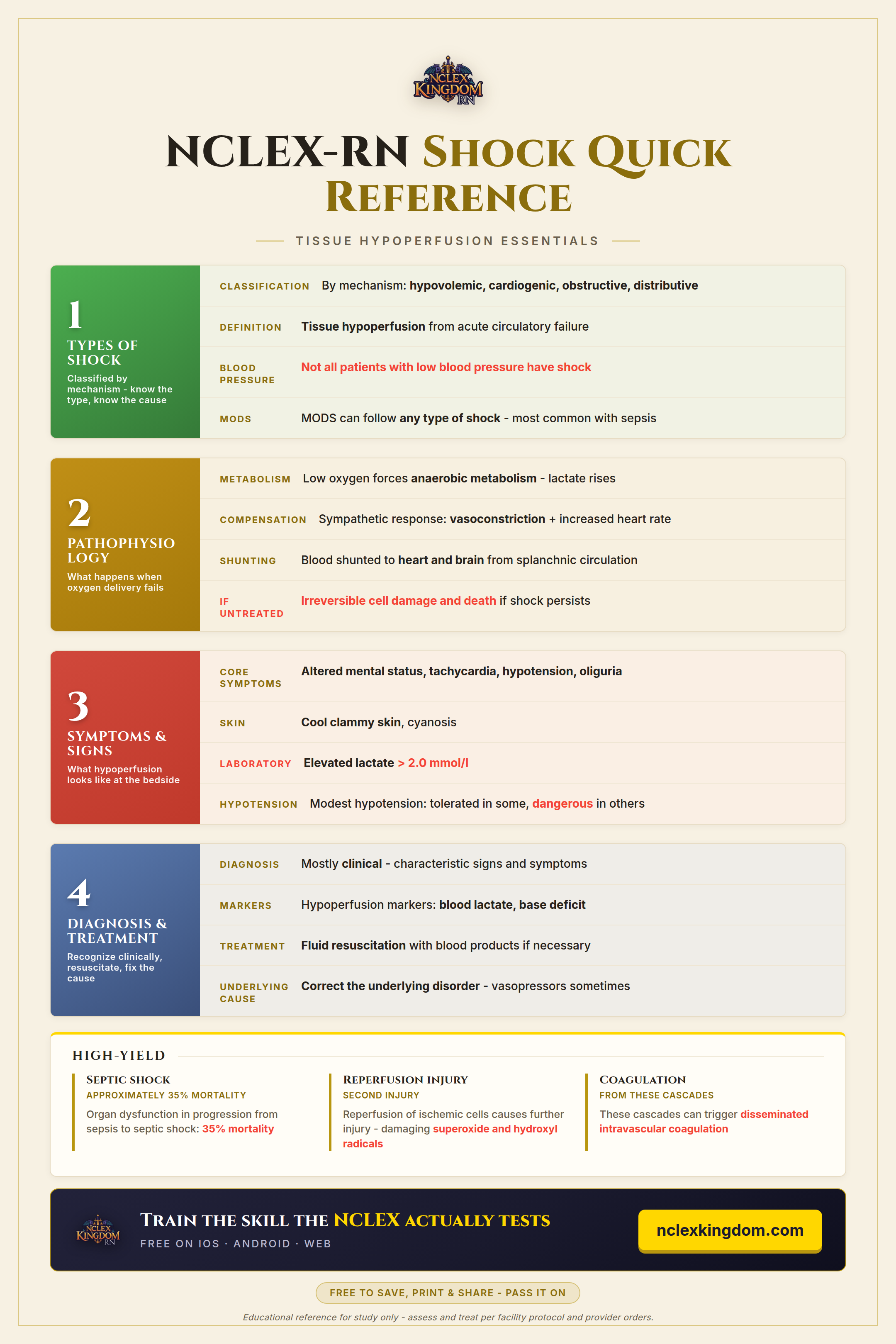
Tap to open the full-size image in a new tab.
Educational reference for study only - assess and treat per facility protocol and provider orders.
Want to practice applying this under exam pressure? NCLEX Kingdom has thousands of NCLEX-style questions - start free in your browser.