NCLEX-RN DI vs SIADH Cheat Sheet (Free Printable)
Free NCLEX-RN di vs siadh cheat sheet — printable study guide for nursing students. Every fact verified against authoritative sources.
The NCLEX-RN pits diabetes insipidus against SIADH for a reason: the two sound similar but call for opposite nursing actions. In DI the kidneys cannot concentrate urine, so output can hit up to 20 quarts a day against the usual 1 to 3, thirst runs constant, and blood glucose stays normal, so it is not diabetes mellitus. In SIADH too much ADH keeps water in, diluting blood sodium down to hyponatremia, the most common clue, while urine comes out very concentrated in low volume. That is the trap the exam sets: you have to know which way the water is moving before you act, whether that means limiting fluid intake for SIADH or watching output closely after brain surgery or a major head injury for DI. The cheat sheet below lays them side by side, blue for DI and red for SIADH, comparing output, thirst, urine quality, causes such as small cell lung cancer or pneumonia, and the rows flagged as emergencies, from IV 3% saline to seizures or coma. Use it actively: cover one column, recall the other, and remember the sheet's own caveat that values vary by laboratory, so follow your facility protocol.
194 words. Every claim traces to a JSON field: DI output/thirst/glucose rows, SIADH mechanism/sodium/urine/treatment rows, column colors, emergency-flagged rows, and the disclaimer. No numbers used beyond 20 quarts, 1 to 3, and 3%.
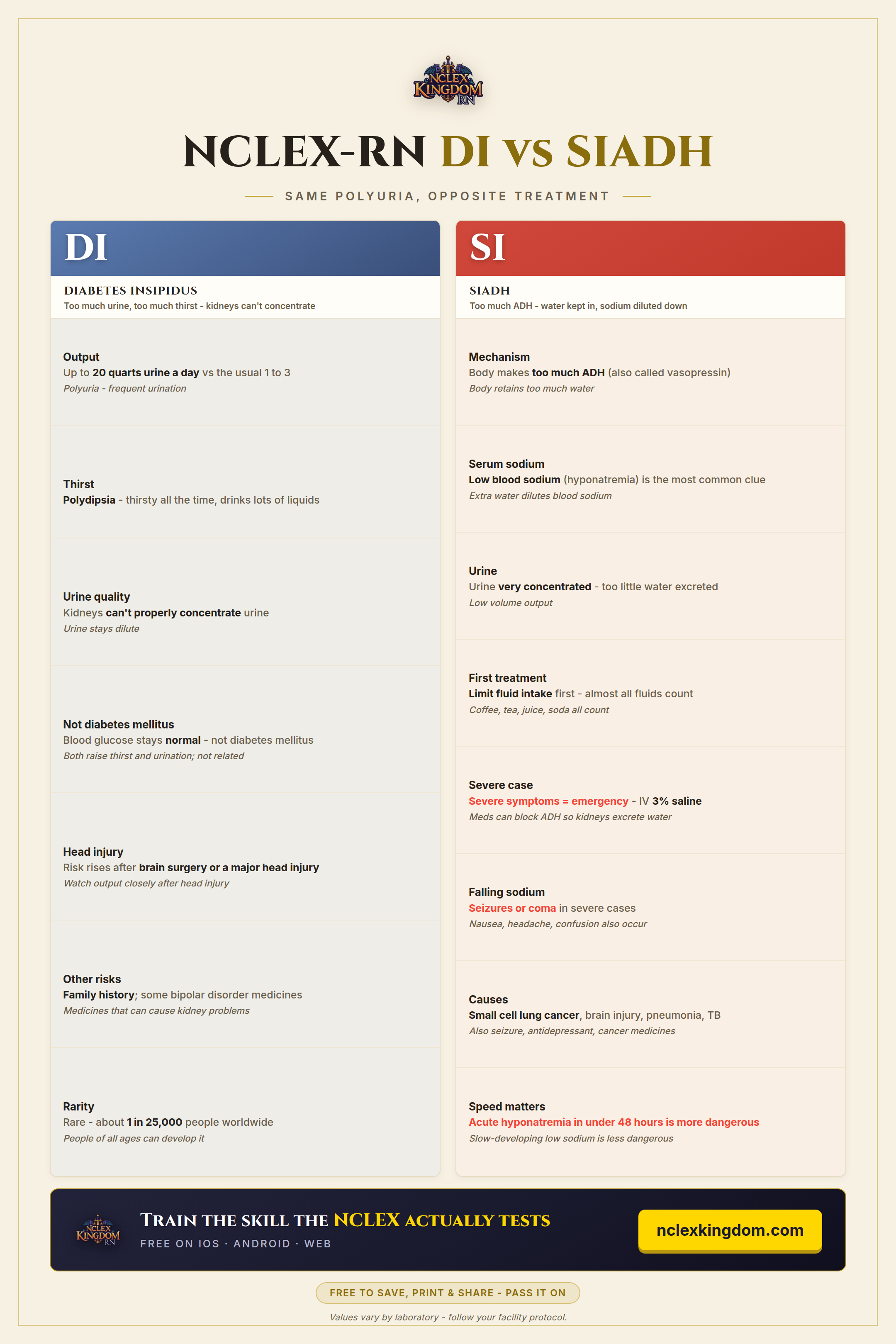
Tap to open the full-size image in a new tab.
Values vary by laboratory - follow your facility protocol.
Want to practice applying this under exam pressure? NCLEX Kingdom has thousands of NCLEX-style questions - start free in your browser.